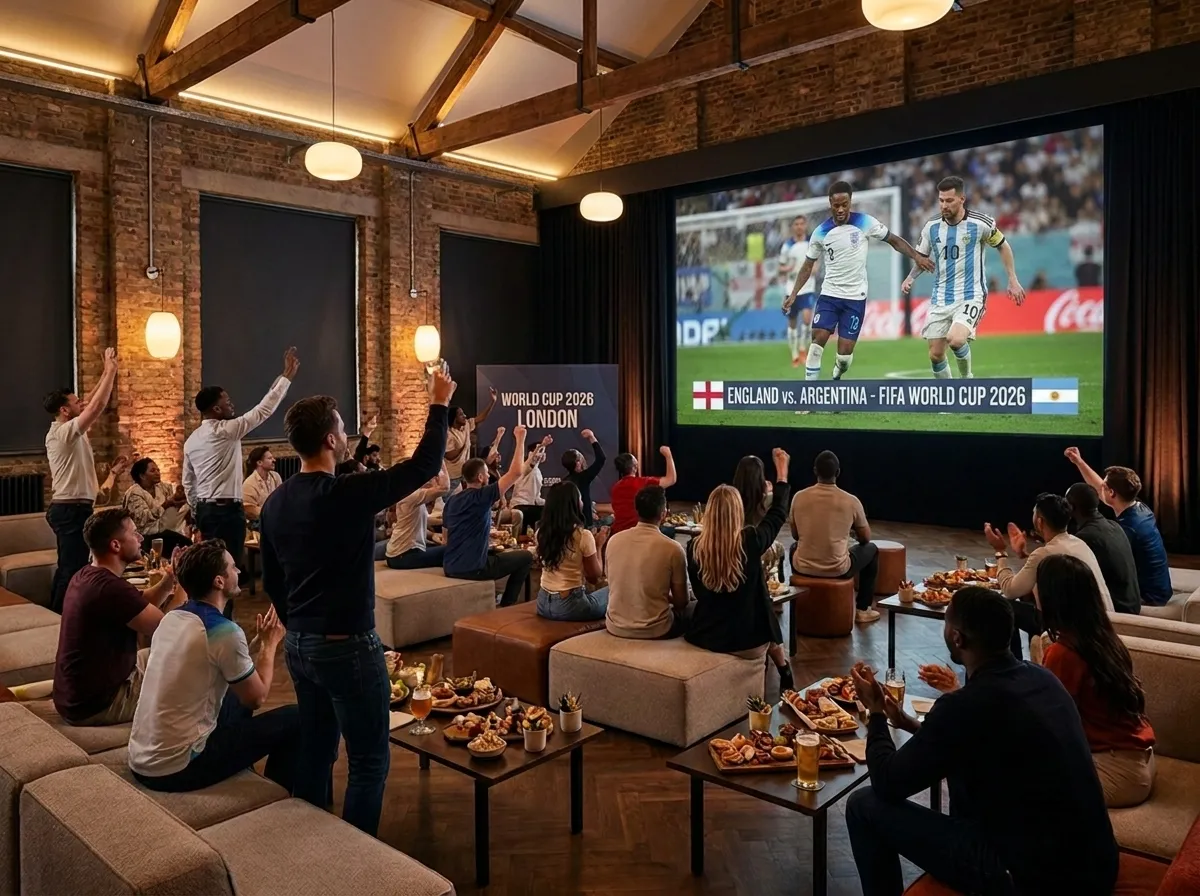

Watching Football Together Is Becoming a Destination in Itself
England has reached the FIFA World Cup 2026 semi-finals after defeating Norway 2–1 in extra time, with Jude Bellingham scoring both goals to send the Three Lions into another major tournament semi-final. Across the UK, pubs are preparing for one of the biggest nights of the summer as supporters plan where to watch England's next match against Argentina.
Yet the biggest story may not be confined to the pitch. While pubs remain at the heart of British football culture, major tournaments are changing where fans choose to experience the game. From sports centres and community halls to private event venues and large-scale watch parties, supporters are increasingly looking beyond traditional viewing options in search of shared experiences that bring people together.
This reflects a broader shift in live events. Football is no longer simply something people watch—it has become something people experience collectively. As demand for shared viewing continues to grow, the venue itself is becoming an increasingly important part of match day.
Why Football Fans Are Looking Beyond the Pub
For generations, the pub has been central to shared football viewing in England. That tradition remains strong, but it was built around a relatively fixed experience: a busy room, a shared screen and an atmosphere shaped largely by whoever arrives first.
Major tournaments now attract a much broader mix of audiences. Families may want a more accessible and controlled environment, businesses may use an England match to bring colleagues together, while supporter groups and local clubs often need greater capacity and space for activities before and after kick-off. The growth of sports centres, community halls and private event venues reflects this fragmentation of the traditional football audience rather than a decline in pub culture.
This is changing the way match-day events are planned. Organisers increasingly consider sightlines, acoustics, seating, catering, accessibility and audience flow alongside the screen itself. These are not simply alternative places to show a broadcast; they are environments designed around a particular group and the experience it expects.
The deeper shift is that shared football viewing is becoming an event format of its own. The match remains the reason people gather, but the venue determines who feels welcome, how they interact and whether the occasion extends beyond the final whistle.
Different Audiences Are Redefining Match-Day Spaces
As football watch parties become more popular, the biggest change is not where people watch the game—it is why they come together in the first place.
For some, an England match is an opportunity to strengthen workplace culture by bringing colleagues together outside the office. For local communities and supporters' groups, it becomes a chance to create a shared atmosphere that extends beyond the final whistle. Brands and organisations are also using major sporting events to host customer gatherings, networking events and community activations that encourage meaningful engagement rather than passive viewing.
This shift is already visible across England. During the 2026 FIFA World Cup, dedicated fan zones such as FanZone UK in Vauxhall, Epsom and Esher have been hosting ticketed screenings with live DJs, street food and entertainment before kick-off, transforming match day into a full social event rather than simply a place to watch the game. Similarly, Abbey Park in Torquay has introduced a family-friendly England Fan Zone featuring live music, football activities and local food vendors, showing how local authorities are using major sporting events to bring communities together.
These examples highlight a broader shift in expectations. The match remains the main attraction, but people increasingly value everything that surrounds it—the atmosphere, the social interaction and the sense of belonging. As a result, organisers are thinking beyond simply finding a venue with a large screen. They are choosing spaces that can deliver the right experience for their audience, making the venue itself an essential part of match day.
Finding the Right Space for Match Day
As watch parties become more intentional, finding the right venue is no longer simply about availability. Organisers are increasingly looking for spaces that reflect the audience they want to bring together, whether that's colleagues, local communities, supporters' groups or customers.
This is where platforms such as SpaceCloud can help. Instead of searching across multiple websites or contacting venues individually, organisers can explore sports centres, community halls and flexible event spaces in one place. Comparing venues by location, capacity, facilities and budget makes it easier to find a space that fits both the event and the audience.
Major sporting tournaments often create a surge in venue bookings, particularly for larger group events. Planning ahead not only provides more choice but also helps organisers secure a venue that delivers the kind of shared experience today's football fans increasingly expect.
Why Shared Viewing Is Changing Live Sports Events
England's World Cup run may have sparked renewed excitement this summer, but the growing popularity of watch parties reflects a broader shift that extends far beyond football.
People are increasingly choosing to experience live moments together, whether that's a major sporting event, a live performance or a community celebration. The success of these gatherings is no longer defined solely by the event itself, but by the environment that brings people together. As a result, venues are becoming active contributors to the experience rather than simply places where it happens.
For organisers, this presents an opportunity to think differently about shared experiences. Choosing the right space is no longer just a logistical decision—it has become part of creating an event that people will remember long after the final whistle.
Planning a watch party for the next big sporting event?
👉 Explore venues for your next watch party on SpaceCloud