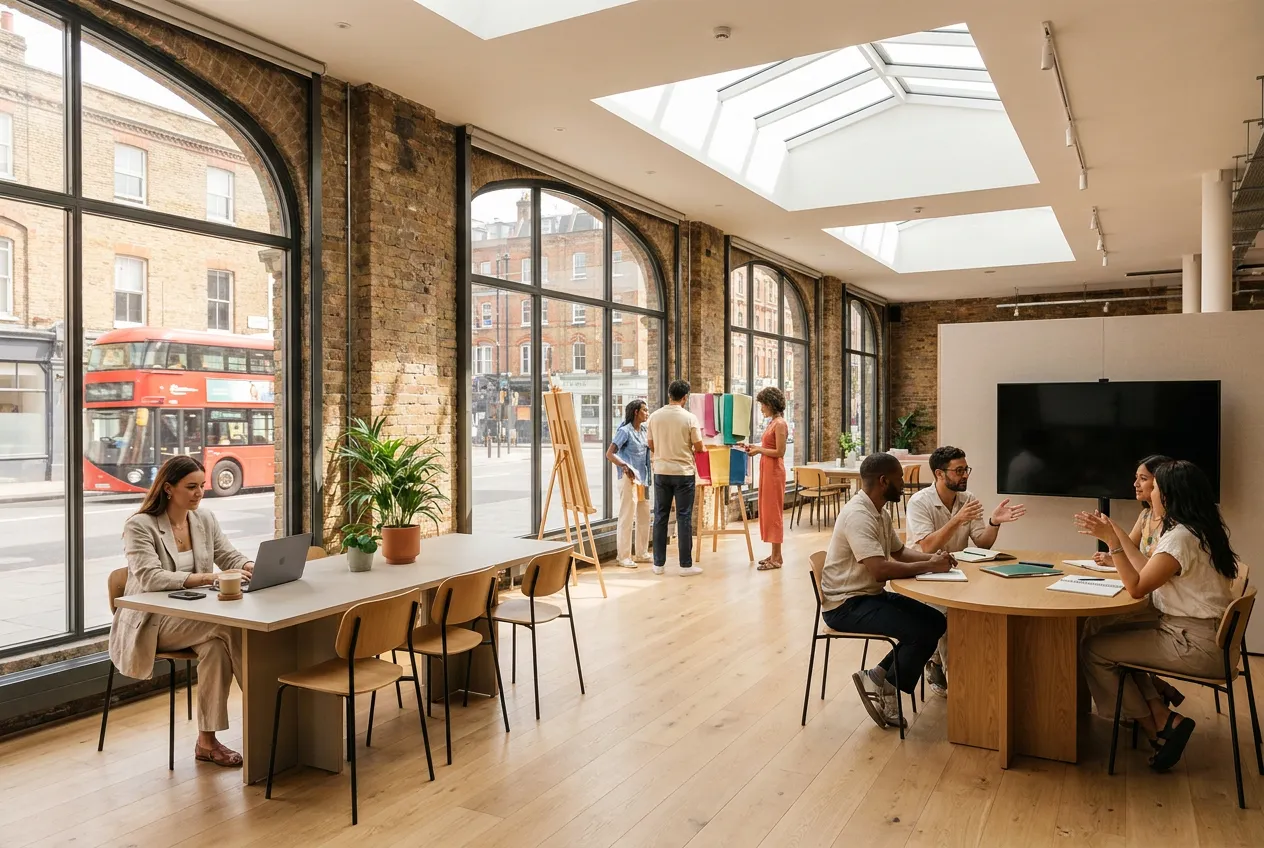

Summer Changes More Than Our Travel Plans
Summer holidays are often associated with travel, sunshine, and time away from work. But they also influence something we rarely think about: how people use physical spaces.
As routines become more flexible during the summer months, the demand for space begins to shift. Companies organise off-site meetings instead of office catch-ups, event organisers take advantage of the season for networking and community events, and freelancers and creators look for professional spaces to work on projects while making the most of longer days.
This seasonal change reflects a broader trend in how people work, meet, and create. Rather than relying on the same places every day, individuals and businesses are choosing spaces based on what they need in the moment—whether that's a meeting room for a client presentation, a studio for content creation, or a venue for a summer event.
Summer holidays do not reduce the need for physical spaces. They simply change when, why, and how people use them—and that is reshaping the demand for flexible spaces across the UK.
How Summer Hours Are Changing Workspace Choices
Summer doesn't just change where people spend their holidays — it changes how they structure their working days.
Across the UK, more companies are introducing seasonal initiatives such as Summer Hours, allowing employees to finish earlier on Fridays during the warmer months. This reflects a wider shift towards more flexible working patterns, with businesses increasingly recognising that productivity does not always depend on following traditional office routines. Recent coverage from The Times highlights how companies are adopting Summer Hours as a way to support employee wellbeing while adapting to changing expectations around work flexibility.
As working patterns become less fixed, the way people use physical spaces is also changing. A quick client meeting may only require a professional meeting room for an hour. A freelancer might choose a hot desk for a focused afternoon, while a team may look for a different environment for collaboration and creative sessions.
Instead of asking, "Where do I work today?" people are increasingly asking, "What space best supports what I need to achieve today?" During the summer holiday season, purpose is becoming more important than routine — changing the way businesses think about and use workspace.
Summer Events Are Shifting Towards Purpose and Experience
The shift towards more intentional space use is not limited to everyday work. It is also changing how businesses plan and host events during the summer months.
As teams spend more time away from traditional office routines, summer has become an opportunity for more focused gatherings — from client networking sessions and team workshops to brand events and community experiences. Instead of simply bringing large groups together, businesses are increasingly looking for spaces that support meaningful interaction.
This reflects a wider change in the events industry. According to Cvent’s 2026 event statistics, planners are placing greater focus on smaller, more personalised events that create stronger attendee experiences, with many professionals turning to more focused formats rather than simply increasing event size. Research from Encore and Boldpush’s 2026 Experience Design Report also highlights the growing importance of attendee connection and interactive formats such as workshops in creating successful live experiences.
For event planners, this means the role of a venue is changing. The best space is no longer simply the one that fits the most people — it is the one that supports the purpose of the event, adapts to different formats, and helps create memorable experiences.
Creative Work Is Becoming More Flexible
Summer is not only a season for holidays and business events — it is also a period when many creators use their time differently.
For independent creators, creative work rarely follows a traditional schedule. Dancers prepare for performances, photographers develop new portfolios, musicians create new material, and freelancers use quieter periods to focus on personal projects. Their work is often shaped by individual projects and opportunities rather than fixed working hours or permanent locations.
This reflects a wider shift in the creator economy. Adobe’s 2026 Creators’ Toolkit Report highlights how creators are increasingly using digital tools to grow their audiences, develop their businesses, and build more independent creative workflows. As creative careers become more flexible, access to the right resources and environments is becoming just as important as the skills themselves.
For many creators, this means moving away from traditional models of owning or permanently renting a workspace. Instead, flexible access allows them to choose professional environments based on each project — whether they need a dance studio for rehearsal, a space for filming content, or a creative workspace for collaboration.
The future of creative work is not defined by having one permanent place to create. It is about having access to the right space whenever new ideas become projects.
The Value of Space Is Becoming More Flexible
The biggest change brought by summer is not a reduction in demand for physical spaces — it is a change in how people access and value them.
Across businesses, events, and creative industries, space is becoming less about having a permanent place available at all times and more about having the right environment when it matters most. A meeting room can support an important client conversation, a hot desk can provide focus during a change in routine, and a dance studio can become the place where a new creative project comes to life.
This shift reflects a broader change in how people think about physical space. Instead of investing in unused capacity throughout the year, businesses and individuals are increasingly looking for flexible solutions that adapt to changing needs, schedules, and projects.
Summer highlights this transformation more clearly than any other season. As routines change and demand becomes less predictable, the most valuable spaces are not necessarily the ones that are always available — they are the ones that are available at the right moment.
Finding the Right Space for Every Moment
Summer reveals a bigger shift in the way we use physical spaces.
As work patterns, events, and creative projects become more flexible, people are no longer looking for spaces simply because they need somewhere to be. They are choosing environments that support what they want to achieve — whether that means bringing a team together, creating new content, or hosting meaningful experiences.
The future of space is not about having more rooms available all the time. It is about having access to the right space when the right moment arrives.
With SpaceCloud, businesses, event planners, and creators can discover flexible spaces across London that match their changing needs — from meeting rooms and hot desks to creative studios and event venues.