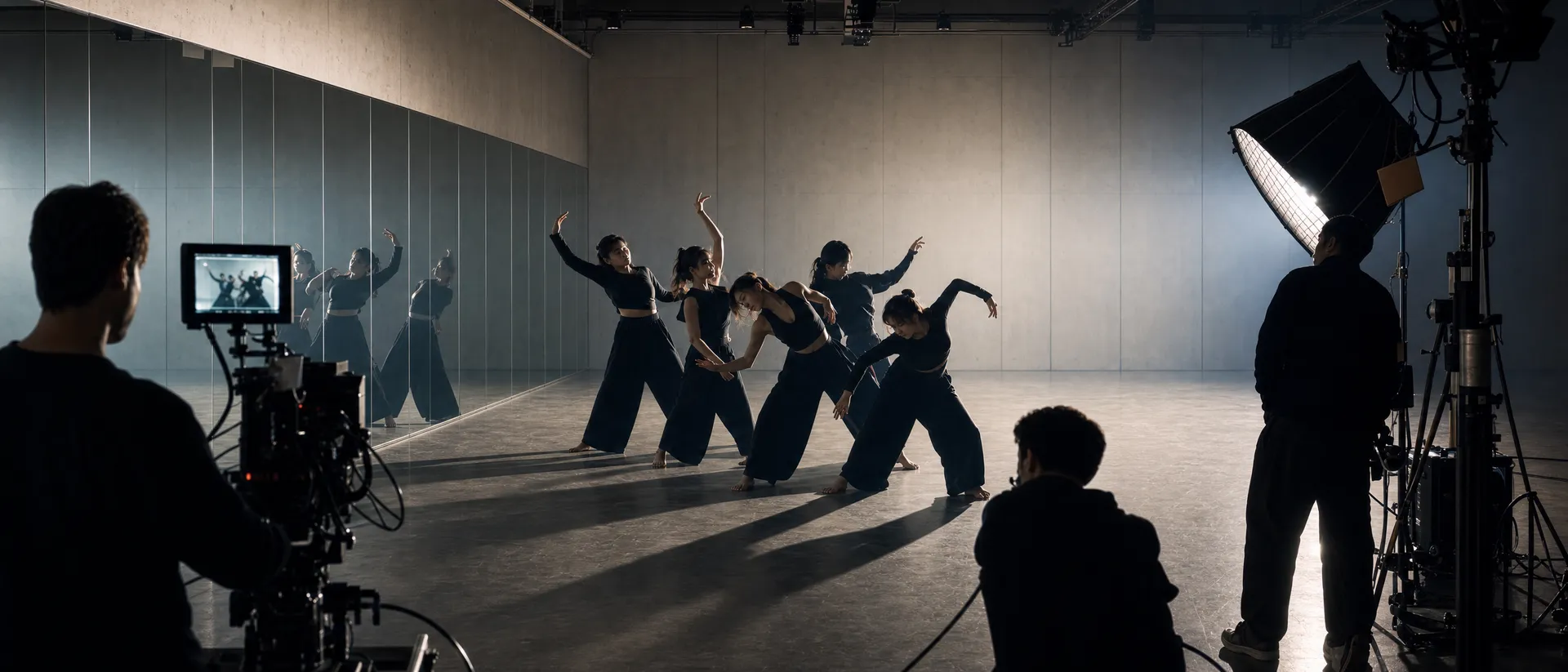

More Creative Projects, More Demands on Dance Studios
Dance studios are supporting more types of creative work than ever before.
Once used primarily for rehearsals and weekly classes, they are now regularly hired for audition self-tapes, workshops, commercial productions, branded content and community events. This reflects the continued expansion of the wider creative economy. The UK Government's Creative Industries Sector Plan sets out plans to significantly increase investment in the sector, supporting further growth across performance, production and other creative fields.
As the role of the dance studio expands, so do the demands placed on the space itself. A studio that works perfectly for a group rehearsal may not be suitable for filming choreography, while a space designed for a workshop may offer little advantage for an individual preparing an audition. Increasingly, the question is no longer “Which dance studio is available?” but “Which space best supports the project?”
The best dance studio is not necessarily the one with the most facilities. It is the one that enables the project to achieve its purpose. When organisers choose a space around the work rather than the venue itself, rehearsals become more productive, productions run more smoothly and participants enjoy a better overall experience.
Why Is One Studio Supporting So Many Different Projects?
The changing role of the dance studio reflects a wider shift in how creative work is produced.
A rehearsal was once the clear purpose of hiring a studio. Today, the same venue may host an audition self-tape in the morning, a choreography rehearsal in the afternoon, a workshop in the evening and a commercial shoot the following day. Rather than serving a single function, studios are increasingly expected to support multiple stages of the creative process.
This change is driven by the way creative projects are evolving. Performances are no longer created solely for the stage. They are adapted for social media, commercial campaigns, educational content and digital audiences, often within the same project. As a result, creative teams need spaces that can adapt just as quickly as the work itself.
The question is therefore no longer whether a dance studio is available. It is whether the space can continue supporting the project as it develops.
What Does Your Project Actually Need?
Although many projects take place in a dance studio, they rarely require the same environment.
An audition self-tape depends on focus, privacy and clear camera angles. A group rehearsal relies on open floor space and safe movement. A workshop must balance teaching, participation and the overall attendee experience, while a commercial production introduces technical requirements that extend well beyond dance itself.
The difference is not simply the number of people using the room—it is the outcome the project is trying to achieve. Teams that begin by defining that objective usually make better decisions about the type of space they need, rather than trying to adapt the project to whatever venue happens to be available.
This represents a subtle but important shift. The most successful creative teams no longer ask, "Which dance studio should we book?" They ask, "What kind of space does this project need to succeed?"
Are You Choosing the Studio Before Defining the Project?
Many venue searches still begin by comparing location, price or available facilities. While these factors matter, they rarely determine whether a creative project succeeds.
A more effective starting point is the project itself. Before comparing venues, define what the session needs to achieve. Is the priority refining choreography, filming content, teaching a workshop or producing a commercial campaign? Once that objective is clear, the requirements for the space become much easier to identify.
This approach not only helps creative teams choose more suitable venues, but also avoids paying for facilities that add little value while overlooking those that genuinely support the work. In many cases, better outcomes come not from booking a bigger studio, but from booking a more appropriate one.
As dance projects continue to evolve, the most successful teams will be those that stop treating venue hire as a logistical task and start treating it as part of the creative process.
Planning your next dance project?
👉 Explore dance studios and rehearsal spaces that match your project on SpaceCloud.