
Why London Climate Action Week Matters for Venue Operators
London Climate Action Week 2026 takes place from 20–28 June, bringing together policymakers, investors, businesses, researchers, and community organisations from across the world.
Now in its eighth year, the event has grown into one of the world's largest independent climate gatherings. As one of the key moments in London's sustainability calendar, it provides a platform for discussions on how cities can respond to climate challenges while continuing to grow.
According to UNEP's London Climate Action Week 2026 overview, this year's programme focuses on practical solutions across areas including energy, sustainable buildings, climate resilience, and investment—highlighting how climate action is increasingly moving from ambition to implementation.
For venue operators, this matters because climate action is becoming part of the wider conversation about how cities develop and where activity concentrates. Decisions around energy, transport, resilience, and public space ultimately influence how people move through cities and where they choose to gather.
In that sense, London Climate Action Week is not simply a climate event. It is also a useful indicator of the priorities that may shape London's future neighbourhoods, public spaces, and venue demand.
Sustainability Is Becoming Part of Venue Demand
Traditionally, venue demand has been shaped by location, accessibility, capacity, and cost.
These factors remain important, but expectations are evolving. Organisations are increasingly considering sustainability as part of their venue selection process. Environmental performance, public transport accessibility, energy efficiency, and responsible operations are becoming part of how venues are evaluated alongside more traditional criteria.
This trend aligns with discussions taking place during London Climate Action Week 2026. The London School of Economics' programme for LCAW 2026 includes sessions focused on net-zero implementation, climate accountability, and sustainable urban transformation, reflecting how climate considerations are becoming embedded within broader business and investment decisions.
For venue operators, this does not necessarily mean sustainability will replace traditional demand drivers. Rather, it is becoming another factor that influences how spaces are perceived and selected. Just as connectivity and accessibility can strengthen a venue's appeal, sustainability is gradually becoming part of its competitive advantage.
Climate Investment Is Also Place-Making
One of the most interesting themes emerging from London Climate Action Week is the growing connection between climate investment and place-making.
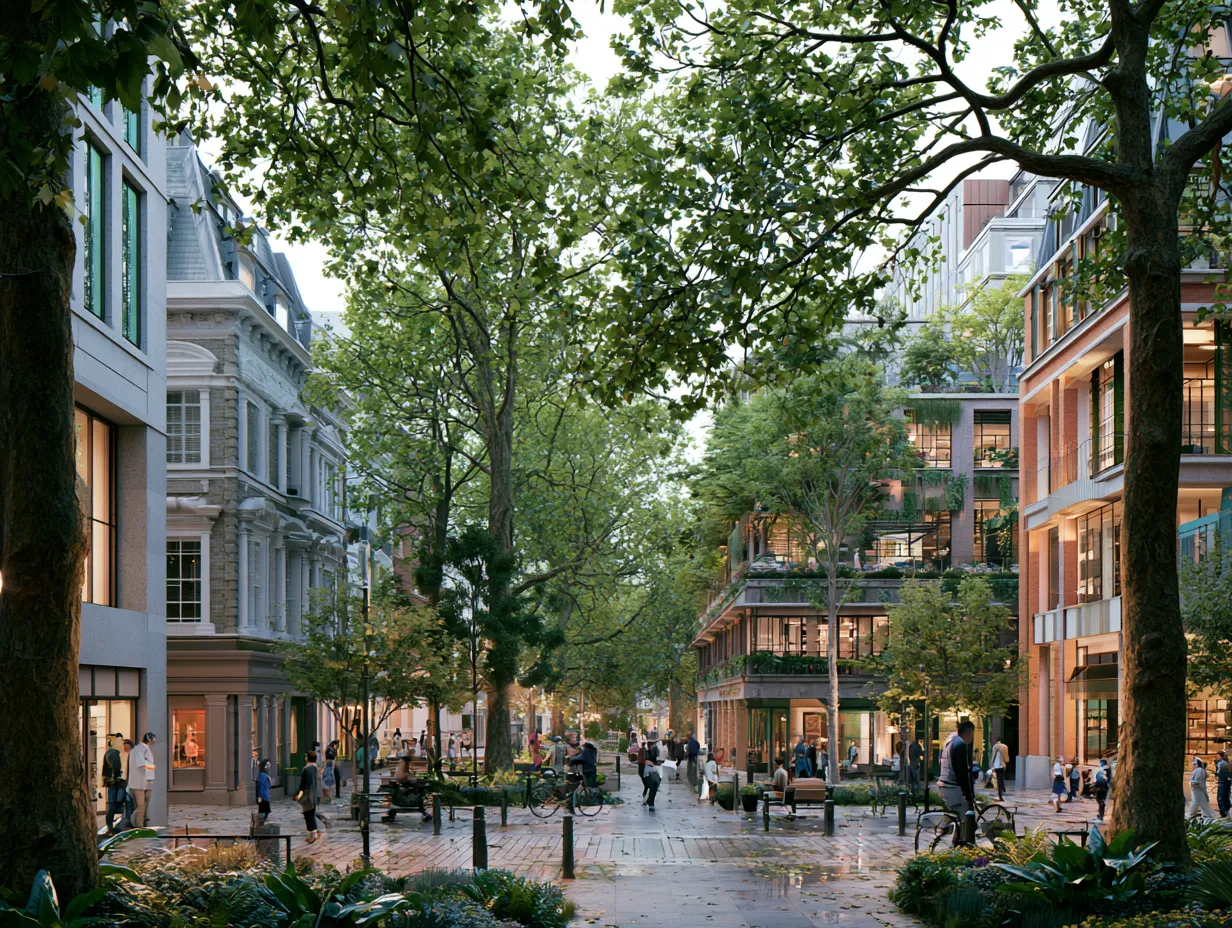
Climate-focused projects are often viewed through the lens of emissions reduction, but their impact on cities is much broader. Investments in green infrastructure, public realm improvements, active travel networks, and climate resilience measures can significantly change how people experience a neighbourhood.
This broader perspective is increasingly reflected across London Climate Action Week 2026. According to UNEP, cities account for 60–80% of global greenhouse gas emissions, making urban areas a critical focus for climate action and investment. Discussions throughout the week highlight not only the need to reduce emissions, but also to create more resilient, liveable, and economically sustainable urban environments.
For venue operators and property owners, this is an important perspective. The neighbourhoods benefiting from climate-focused investment today may become some of the city's most attractive destinations tomorrow. In many ways, climate investment can have a similar effect to traditional infrastructure investment—creating the conditions that support future footfall, local activity, and venue demand.
Sustainable Growth Starts with Existing Spaces
Discussions throughout London Climate Action Week 2026 frequently focus on reducing emissions through innovation, investment, and new infrastructure. However, an equally important opportunity lies in making better use of the spaces that already exist.
Across London, underutilised retail units, vacant commercial properties, community halls, and flexible workspaces represent significant untapped potential. While urban growth is often associated with new development, many neighbourhoods already contain spaces that could support local businesses, events, and community activity with relatively limited additional investment.
This reflects a broader shift in urban thinking, where regeneration and reuse of existing assets are increasingly recognised as part of sustainable city development. As highlighted in UN-Habitat’s work on urban regeneration, cities are placing greater emphasis on adapting existing spaces rather than relying solely on new construction.
This is where SpaceCloud sees a significant opportunity. As neighbourhoods evolve and new centres of activity emerge, connecting underutilised spaces with businesses, event organisers, and local communities can help maximise the value of existing urban assets while supporting more sustainable patterns of growth.
For venue operators, the opportunity may not always lie in building new spaces. In many cases, it lies in recognising the potential of spaces that already exist and positioning them to serve the changing needs of growing communities.
Looking Beyond Today's Demand
London Climate Action Week highlights a broader shift taking place across the capital. Sustainability is no longer simply an environmental objective, but a factor that is increasingly influencing investment decisions, urban regeneration strategies, and how organisations think about the use of space.
For venue operators, property owners, and event professionals, the challenge is not only understanding where demand exists today, but recognising how climate-driven investment may shape the places people choose to gather tomorrow. Just as transport infrastructure has historically influenced venue demand, climate resilience and sustainability investment may become important indicators of future opportunity.
In this context, understanding future demand is becoming less about reacting to current trends and more about interpreting the signals that shape how cities evolve. Which sustainability trends do you think will have the biggest impact on London's venue and events sector over the next decade?
👉 Explore emerging venue opportunities across London on SpaceCloud.