
What Happens After the Exhibition Matters More Than the Exhibition Itself
Once the doors close at major London venues such as ExCeL London, Olympia London and the Business Design Centre, attention usually shifts too quickly to travel, emails, and the next task. Yet it is often in this short, unguarded window that the most useful insights still sit unrecovered. Without a pause, they tend to fade faster than expected.
A brief, structured conversation immediately afterwards helps slow that loss. It gives shape to what was otherwise fragmented across conversations, meetings, and chance encounters on the exhibition floor. Patterns begin to emerge when ideas are spoken out loud rather than left in isolation. In this sense, timing is not a detail but the deciding factor.
There is a quiet discipline to capturing thinking while it is still warm. The value is not in length of discussion but in its immediacy. Once people disperse, the texture of the event changes. What remains is only what was already made explicit.
The Value of Leaving the Noise Without Leaving the City
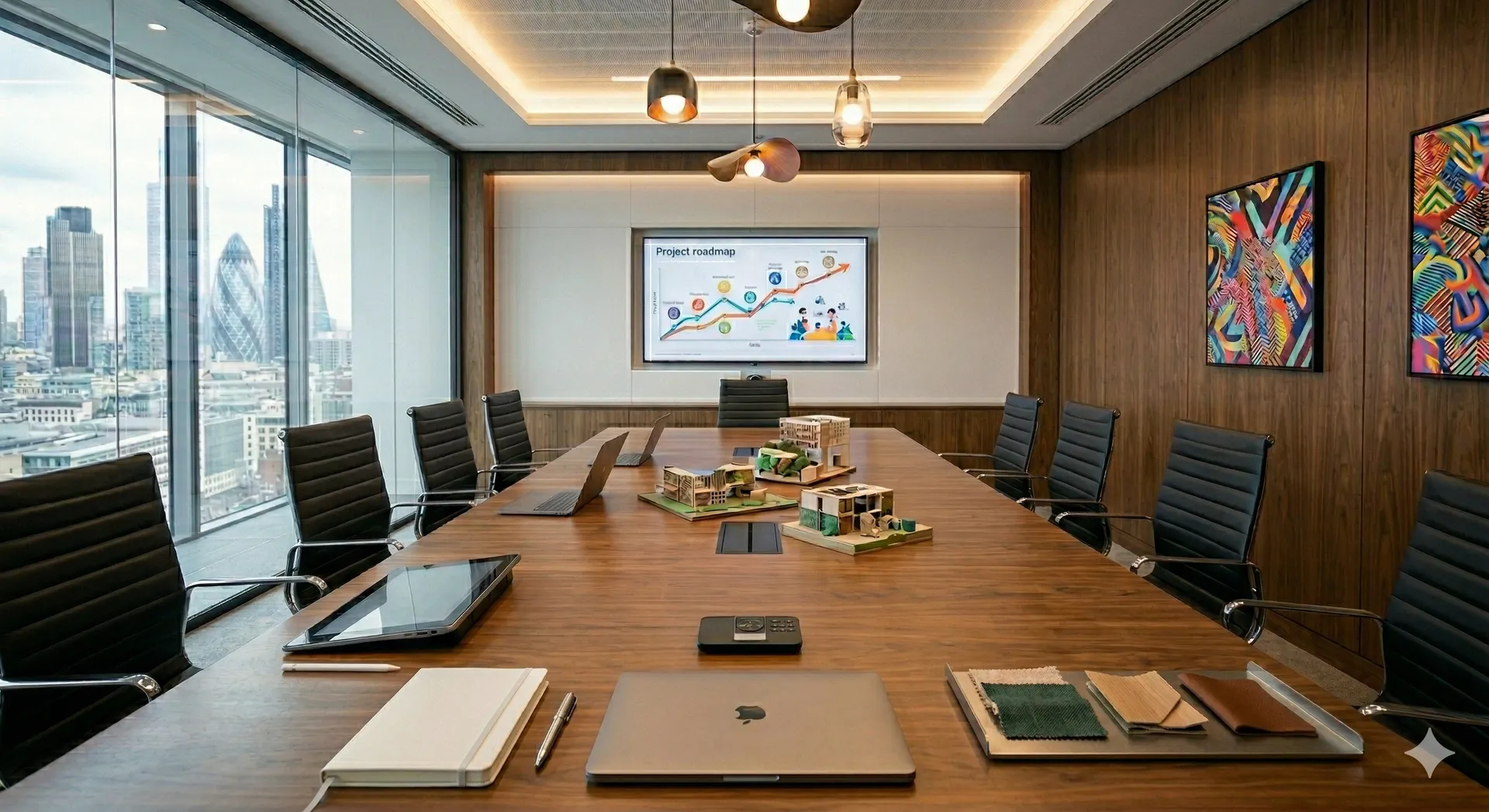
The most effective debriefs often take place just far enough from the exhibition to reset focus, but not so far that energy is lost in transit. Proximity to venues in London such as ExCeL or Olympia allows teams to shift environments without breaking momentum. The aim is not distance, but transition.
The character of the space matters more than its size or formality. What is needed is not stimulation, but clarity. A quieter room naturally changes the rhythm of conversation, making it more deliberate and less reactive. In that change of tone, useful thinking tends to surface.
When the environment is right, nothing needs to be forced. People settle into a different pace almost instinctively. The exhibition noise drops away, and what remains is usually more considered. That shift is subtle, but it changes the quality of what follows.
When Simplicity Becomes the Most Strategic Choice
After a long day on the exhibition floor, complexity is the last thing teams need. Searching across multiple meeting spaces in London only adds unnecessary friction. A more effective approach is to narrow the choice before the day even ends.
Curated spaces remove that burden of comparison. The decision has already been filtered through relevance, not volume. Layout, accessibility, and usability are no longer abstract considerations but pre-aligned features. This makes the transition from event to debrief almost immediate.
There is also a kind of calm that comes from not having to decide again. Teams arrive, sit down, and begin. No adjustment period, no settling in. Just continuation of thought at the moment it matters most.
The Hour That Turns Experience Into Direction
The debrief is often treated as an administrative step, but in practice it is where meaning is formed. Without it, exhibitions remain collections of impressions. With it, they become structured input for decision-making. The difference is subtle but important.
The right setting in London supports this process without drawing attention to itself. It does not shape the conversation directly, but it removes the distractions that might distort it. In that sense, the space works quietly in the background.
If there is a single principle that tends to hold true, it is this: clarity depends on timing more than effort. The sooner insights are captured, the more usable they remain. When a space is already in place, there is no gap between experience and reflection. And in that gapless moment, decisions tend to be better formed.