
Why Flexible Spaces Matter More Than Ever
One of the biggest changes in work isn't where people work—it's why they come together. As hybrid working has made individual work increasingly location-independent, bringing people together has become a far more deliberate decision than it once was.
For much of the last century, offices were designed around routine work because that was where work happened. Today, routine work can happen almost anywhere. The moments that still bring people together are different: strategy sessions, workshops, planning days and conversations that depend on collaboration rather than concentration.
Hybrid working didn't reduce the importance of physical space—it changed its purpose.
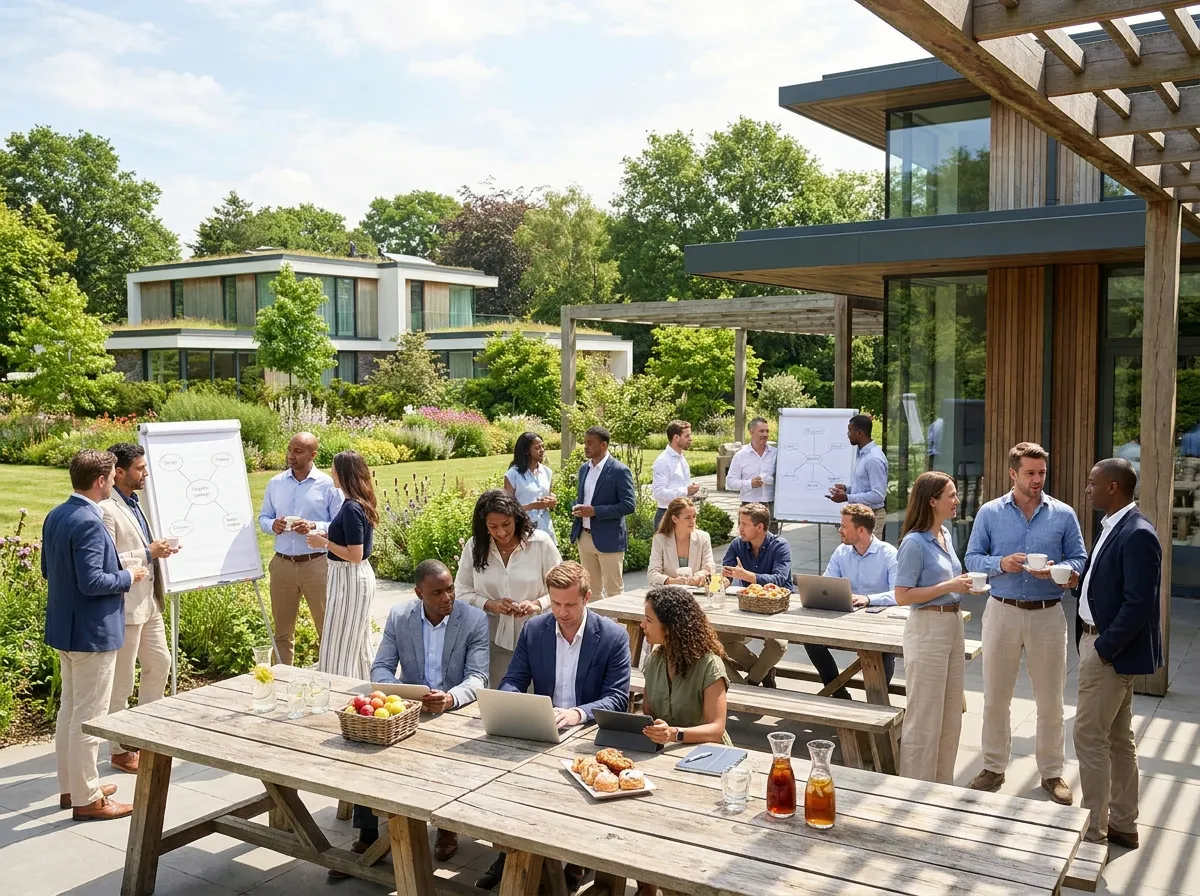
As organisations rethink the purpose of gathering, they are also rethinking the environments that support it. Summer simply makes this shift more visible, offering a natural opportunity to step beyond the office and bring teams together in spaces designed for discussion, creativity and connection
The Environment Shapes the Outcome
Bringing people together is only the first step. The environment in which people meet often determines what those interactions ultimately produce. The same agenda, discussed by the same team, can lead to very different outcomes depending on the setting in which it takes place.
Research in workplace design and environmental psychology has consistently shown that physical environments influence how people think, interact and solve problems. Factors such as spatial layout, natural light, acoustics and opportunities for informal interaction shape not only individual wellbeing but also the quality of collaboration. Rather than acting as a passive backdrop, the environment actively influences participation, communication and decision-making.
This is one reason why organisations are increasingly looking beyond the traditional boardroom for strategy days, workshops and team offsites. Conventional meeting rooms are designed for efficiency and structured discussion. They are less suited to the kinds of conversations that depend on creativity, experimentation or relationship building, where movement, smaller group discussions and informal interactions often play a significant role.
Gensler's Design Forecast 2026 argues that experience has become the true measure of real estate value, reflecting a growing recognition that the most effective workplaces are those designed around human behaviour rather than function alone. For organisations, the implication is significant. Increasingly, they are selecting spaces not simply to accommodate an agenda, but to influence how that agenda unfolds.
When Summer Changes the Way Teams Work
Summer doesn't change the way organisations work. It reveals which parts of work no longer depend on the office.
Longer daylight hours, greater flexibility around annual leave and a natural shift towards outdoor environments encourage organisations to rethink how they bring teams together. Planning days, leadership workshops and team offsites become easier to organise, exposing how many collaborative activities no longer need to happen inside a traditional workplace.
The contrast highlights one of the biggest limitations of fixed workplaces. Offices are designed to provide consistency throughout the year, but collaboration is rarely consistent. A strategy workshop, a quarterly planning session and a team offsite all require different environments, even though they are often expected to happen in exactly the same kind of room.
Summer therefore becomes more than a convenient time for team offsites. It becomes an opportunity to rethink where collaboration happens and what kind of environments support it best. In many ways, the season doesn't create new ways of working—it simply makes existing shifts easier to see.
How Do You Choose the Right Venue for a Summer Team Offsite?
The most successful summer offsites rarely begin by asking "Where should we go?" Instead, they begin by asking "What are we trying to achieve?" Once that objective is clear, choosing the right environment becomes far more intuitive.
Different objectives call for different environments. Rather than searching for the "perfect" venue, the goal is to choose a space that supports the outcome your team is trying to achieve.
For strategy workshops, look for venues with flexible breakout spaces, natural light and quieter surroundings that encourage focused discussion and long-term thinking.
For leadership retreats, smaller private venues or countryside settings can provide the calm, privacy and perspective needed for strategic reflection and decision-making.
For creative planning sessions, consider design studios, converted warehouses or gallery spaces where a change of environment can help teams break routine thinking and generate new ideas.
For team connection and culture-building, outdoor venues, gardens and riverside spaces often create opportunities for the informal conversations that strengthen relationships beyond the agenda.
Ultimately, the venue should support the purpose of the day—not the other way around. The most successful summer offsites aren't defined by the venue itself, but by how well the environment supports the purpose of bringing people together.
A Smarter Way to Find Summer Team Offsite Venues
How do you find the right venue once you know what your team needs? Defining the purpose of a summer offsite is often the easy part. The real challenge is finding a space that balances the right location, capacity, budget, availability and atmosphere. Comparing venues across multiple websites and contacting each one individually can quickly become the most time-consuming part of organising an event.
This is why many organisations are choosing venue sourcing platforms such as SpaceBiz. Rather than spending hours comparing venues, teams can submit their requirements—including location, group size, budget, preferred date and event type—and receive tailored recommendations from verified venue partners. The result is a simpler way to find spaces that fit both the practical requirements and the experience they're trying to create.
Finding the right venue is no longer simply about availability. It's about choosing an environment that supports the way your team wants to work together. As organisations become more intentional about bringing people together, the space itself becomes part of the strategy—not just the setting.
Planning a summer team offsite?
👉 Tell SpaceBiz what you're looking for and receive tailored venue recommendations.