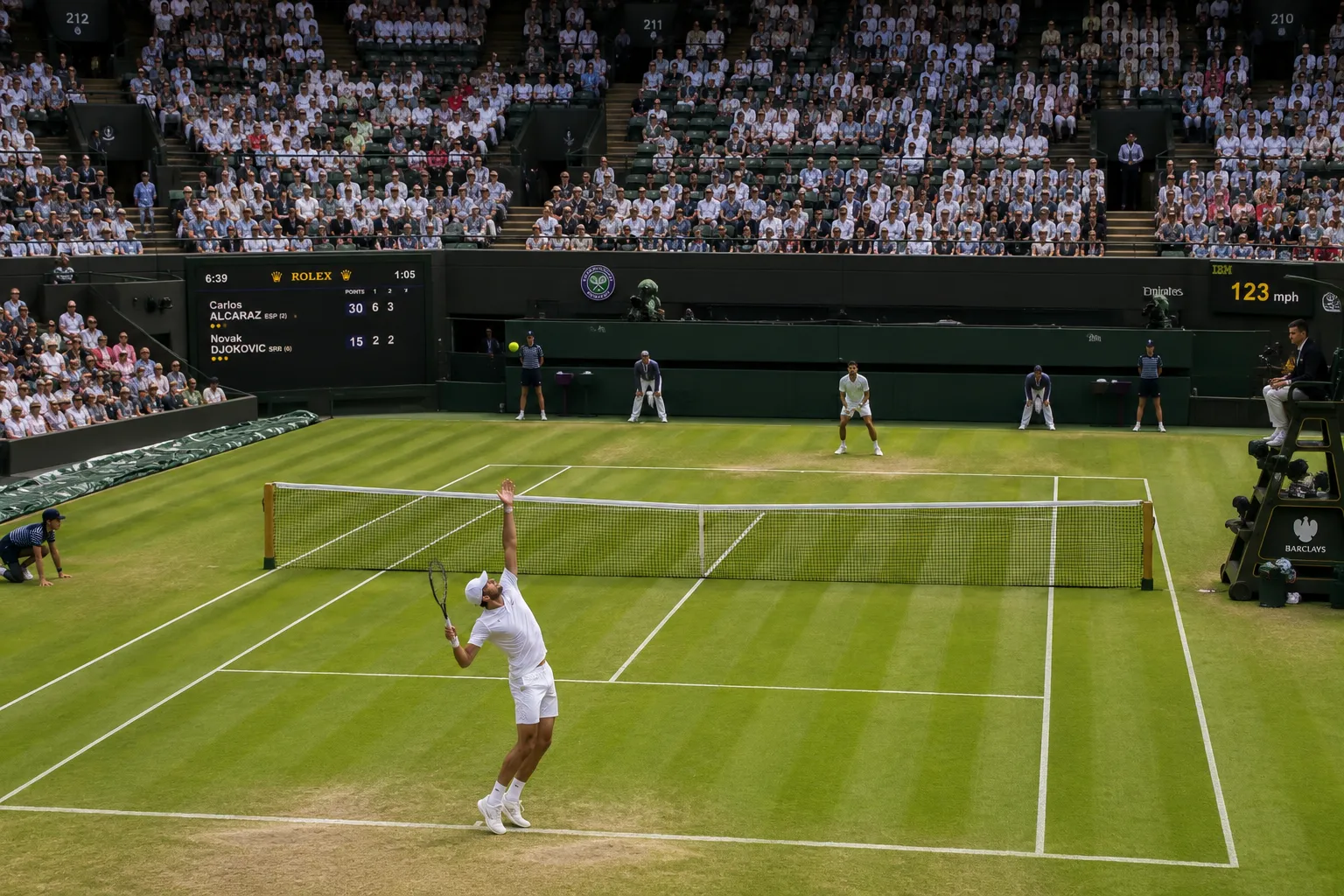

Wimbledon Is More Than a Tennis Tournament
The 2026 Wimbledon Championships take place from 29 June to 12 July, once again bringing together world-class tennis, global audiences, and one of London's most recognisable sporting events.
However, Wimbledon isn't simply one of the world's oldest tennis tournaments.
Every summer, it transforms a corner of London into a place where sport, culture, hospitality, and brand experience converge. Corporate guests meet clients, global brands entertain partners, and thousands of visitors become part of an experience that extends well beyond Centre Court.
That is what makes Wimbledon so remarkable. Its value isn't created by tennis alone. It comes from decades of carefully shaping a place that people immediately recognise—not only by what happens there, but by how it feels to be there.
For brands, that raises an increasingly relevant question.
What if the space itself has become part of the product?
Why Place Matters in a Digital World
AI is changing how brands create content, personalise communication, and reach audiences at scale. Digital experiences have never been easier to build. Yet as digital interactions become increasingly frictionless, physical experiences become increasingly distinctive.
According to PwC's Global Entertainment & Media Outlook 2026–2030, while AI continues to reshape how content is created and delivered, demand for live and immersive experiences is also growing. The report suggests that, in an increasingly digital world, people are placing greater value on experiences that are immersive, emotional, contextual, and personal.
That helps explain why physical spaces remain so powerful. They engage multiple senses, encourage spontaneous conversations, and create shared moments that digital platforms still struggle to replicate.
For brands, investing in workshops, hospitality, product launches, and pop-up experiences is no longer simply about hosting events. It is about creating meaningful interactions that people remember long after they leave.
Spaces Don't Just Host Brands—They Express Them
A venue is no longer simply where an event happens—it is part of the experience itself.
Every physical environment communicates something about the brand behind it. Architecture, atmosphere, neighbourhood, lighting, accessibility, and even the journey to the venue begin shaping perceptions long before the first conversation or presentation.
A converted warehouse creates a very different impression from a luxury hotel. A neighbourhood studio feels different from a corporate conference room. Neither is inherently better; each tells a different brand story and attracts a different kind of audience.
For brands, choosing a venue is no longer just an operational decision. It is a strategic one. The right space doesn't simply host an experience—it reinforces the values, personality, and identity a brand wants people to remember.
Experience Is Designed, Not Delivered
The question for brands is no longer simply, What event should we host? It is, What do we want people to remember after they leave?
That shift reflects a broader change in how brands think about engagement. According to Inizio Engage XD's Experiential Trends Report 2026, the most effective brand experiences are those that "resonate long after the moment has passed"—moving beyond one-off events to create lasting emotional connections.
Memorable experiences are rarely created by content alone. They emerge through the interplay of people, place, and purpose. The venue, the atmosphere, the conversations, and even the moments between the programme often leave a stronger impression than the presentations themselves.
Wimbledon demonstrates this remarkably well. Its reputation is built not only on world-class tennis, but on a carefully orchestrated experience where tradition, hospitality, and place come together to create something that feels unmistakably Wimbledon.
The Competitive Advantage AI Can't Replicate
AI will continue to transform how brands create content, personalise communication, and automate customer journeys. As these capabilities become increasingly accessible, they are also becoming easier to replicate.
What becomes harder to copy is the experience itself.
Technology can scale efficiency, but physical spaces create context. They give brands a place to express their identity, bring communities together, and create moments that feel authentic rather than algorithmic. In an age of abundant digital content, it is often the real-world experience that becomes a brand's strongest point of differentiation.
Perhaps that is Wimbledon’s most enduring lesson. Its legacy is built not only on elite tennis, but on decades of carefully shaping an experience that people associate with tradition, atmosphere, and place.
Not every brand can host an event on Centre Court. But every brand can think more intentionally about the role physical space plays in building connection, trust, and lasting memories.
A Final Reflection
Cities have always been shaped by the places where people gather. Today, brands are becoming part of that urban fabric—not only through what they sell, but through the spaces they create and the experiences they enable.
Perhaps that is why Wimbledon continues to matter beyond sport. It reminds us that places can accumulate meaning over time, becoming part of a city's identity and, in turn, part of a brand's.
At SpaceCloud, we explore this intersection between cities, space, and experience—because the future of branding will be shaped not only by what happens online, but by where people choose to come together.
👉 Discover spaces that shape memorable brand experiences on SpaceCloud.