
Changing Role of Cultural Spaces in London
When discussions about the future of cities take place, they tend to focus on housing, transport, or commercial development. Far less attention is paid to a quieter question: where do people go to belong?
For much of the twentieth century, the answer was relatively straightforward. Libraries, community centres, local cafés, youth clubs and cultural institutions provided informal environments where social life could unfold. These were the kinds of places that Ray Oldenburg's concept of the "third place" sought to describe—spaces beyond home and work where communities form through repeated everyday interaction, and which play a key role in building the social connections that underpin civic life.
Today, however, the geography of belonging is changing.
Across London and other global cities, traditional third places are harder to access as more social life moves online. Yet rather than reducing the need for physical environments, digital culture appears to be increasing demand for them, as people still rely on shared physical settings to turn interests into real relationships and ongoing participation.
K-Playground and Cultural Participation in London
One of the defining characteristics of modern cities is the shift from cultural consumption to active participation. Across music, fashion, gaming, and entertainment, people increasingly seek opportunities to gather, share experiences, and connect with others who share similar interests. As a result, cultural spaces are now judged less by what they offer and more by what they enable.
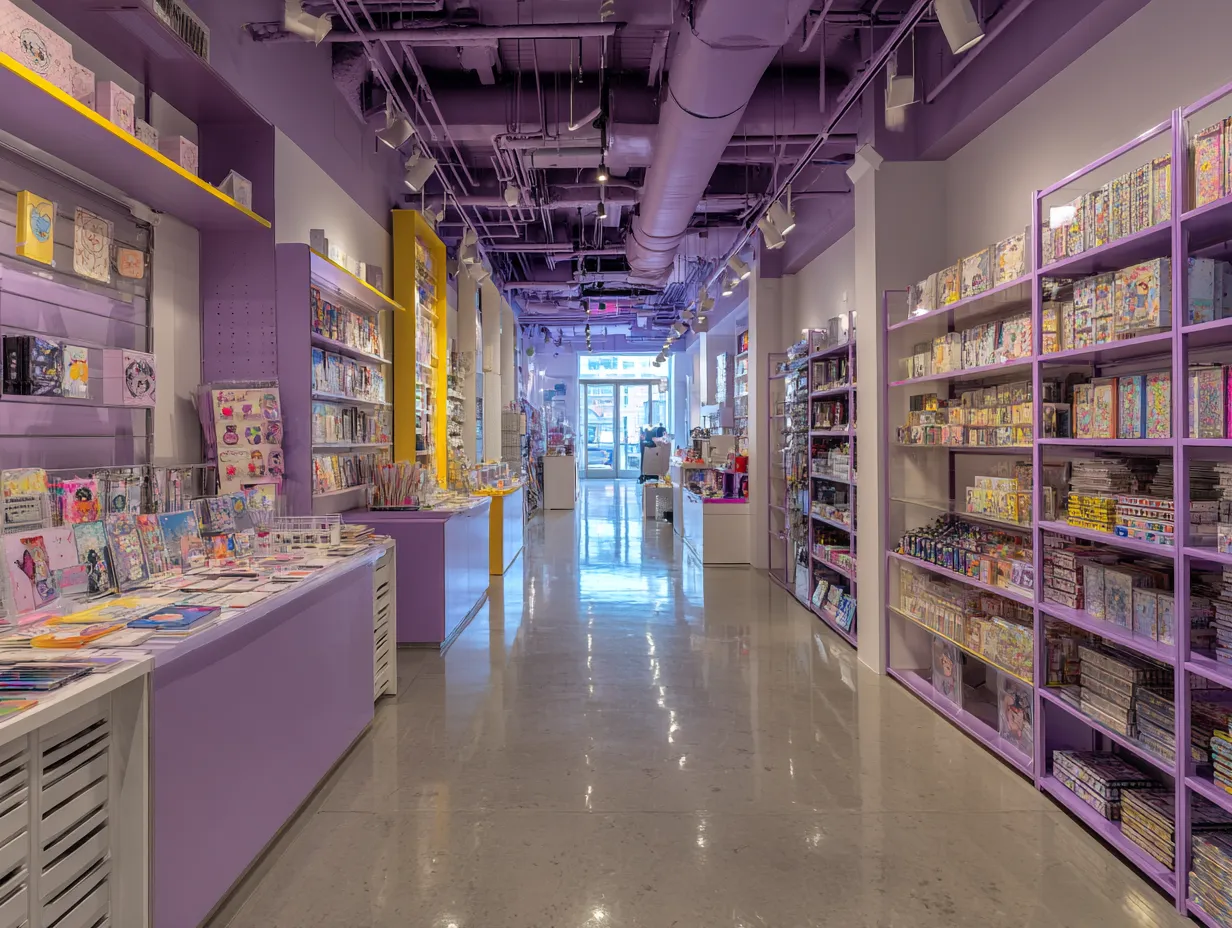
It is within this context that K-Playground becomes interesting. Located beneath Haymarket near Piccadilly Circus, it is often described as a K-pop destination, but this framing only partially captures its role in London’s evolving cultural landscape.
Alongside retail and merchandise, it hosts fan gatherings, themed events, and interactive experiences that encourage participation rather than passive consumption, turning what might begin as a shopping visit into a more social experience connected to communities that already exist online.
For urbanists and space curators, this distinction matters: the most relevant cultural spaces today function less as destinations for transactions and more as platforms for interaction.
Why Physical Space Still Matters in a Digital Culture
K-pop fandom provides a useful example of this phenomenon.
It is one of the most digitally connected cultural communities in the world, with fans discovering artists and organising through social media across borders. Yet despite this digital infrastructure, physical gathering places remain important.
The reason is relatively simple: digital platforms create networks, but physical environments create presence.
While online communities facilitate communication, places provide the setting in which relationships deepen, identities are expressed, and shared experiences take shape. Recent research on place attachment highlights how emotional and social bonds to place emerge through repeated interaction within everyday urban environments, while studies on social infrastructure and contemporary “social layer” urban systems emphasise how shared spaces continue to generate social ties that cannot be fully replicated online.
Seen through this lens, K-Playground functions less as a retail venue and more as an urban anchor for a community that largely exists online. Merchandise may attract initial visits, but shared cultural participation is what sustains engagement and repeat visits.
What K-Playground Reveals About London's Cultural Landscape
Spaces like K-Playground reflect wider shifts across London’s cultural landscape. In the UK cultural sector, there is growing attention on access to affordable creative and community spaces for younger people, with organisations such as Roundhouse highlighting their role in early career and cultural development.
At the same time, there is concern about the decline of informal spaces where people can explore interests, meet others, and build creative confidence outside formal institutions.
In response, cultural venues are increasingly combining roles that were once separate—blending retail, events, and community interaction into a single environment. This hybrid model is becoming a defining feature of successful urban spaces, where the value lies not just in visiting, but in having a reason to stay.
K-Playground fits into this shift, not only as a cultural venue, but as a space where culture becomes something experienced rather than simply observed.
The Expansion of K-Culture Spaces in London
As this cultural model continues to evolve, it is also beginning to expand beyond a single type of venue or experience. What was once centred around retail or fan events is gradually diversifying into a wider ecosystem of hybrid cultural formats.
In London, this is increasingly visible in the emergence of concepts such as K-cafés, K-play spaces, K-photo studios, and K-sing experiences, where different aspects of culture are translated into distinct spatial formats. Each variation offers a slightly different form of participation—whether it is socialising over themed food and drinks, engaging in interactive photo experiences, or taking part in music and performance-based activities.
Taken together, these developments suggest that “K-culture” is no longer confined to content or consumption alone. Instead, it is becoming spatially expressed, shaping how people gather, interact, and experience culture in everyday urban life.
What Space Curators Can Learn
For those involved in placemaking, cultural programming and space curation, the lessons extend far beyond K-pop.
The most valuable urban spaces increasingly function as frameworks through which communities can gather and evolve. Their success is determined not solely by design, square footage or commercial performance, but by the relationships and activities they make possible.
From this perspective, K-Playground represents something larger than a niche cultural venue. It demonstrates how contemporary communities are creating new forms of urban infrastructure at a time when traditional third places are becoming harder to find.
The future of cities may not depend solely on building more space. It may depend on creating spaces that give people a reason to gather in the first place.
👉 For further reading on how K-pop is reshaping urban space in London.